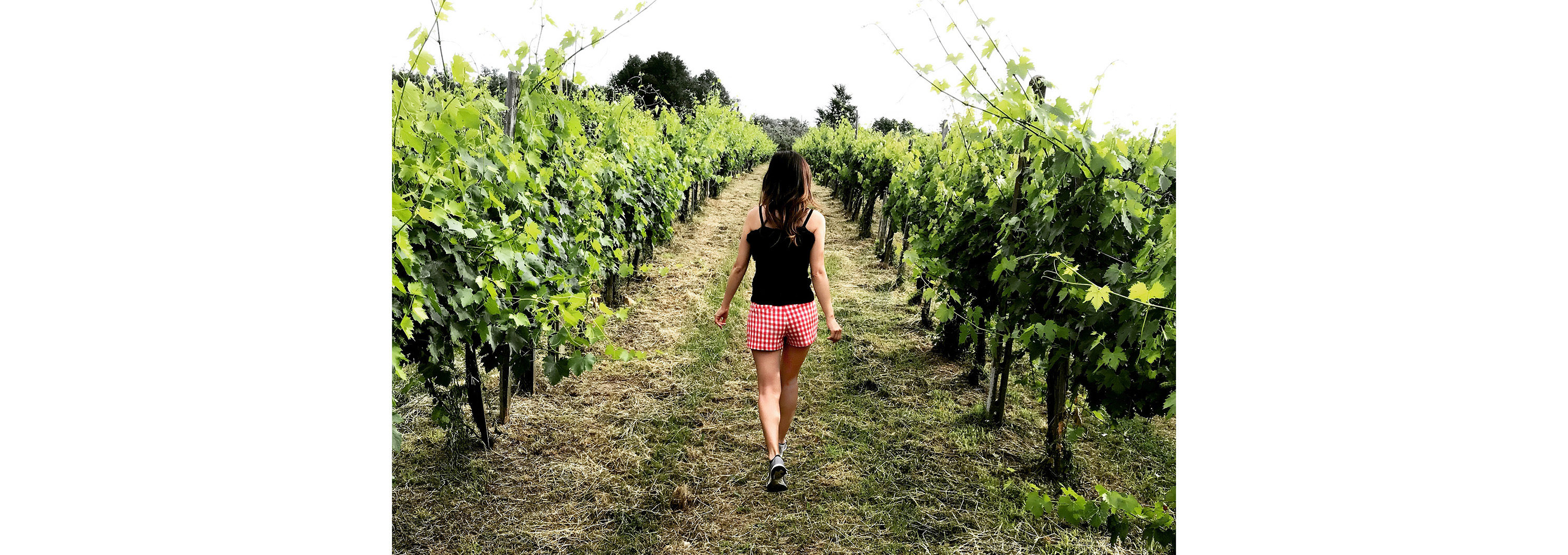
Wine is a language enjoyed and learned through immersion—through tasting, listening, and returning to the glass again and again. Much of my own wine education has happened in wine bars, walking in vineyards with patient producers, and accepting generous pours in small cellars where stories are shared as freely as the wine. I don’t come to wine through years of restaurant service or access to constant trade tastings, but as a writer shaped by curiosity, conversation, and experience over time.
So here’s the question worth asking: what happens when some of the most important reference points—the legendary benchmark bottles—are not accessible to most tasters?
I’ve come close to these cultural landmarks – wines that have been distinguished for generations as symbols of craft and history, shaping our understanding of greatness. Pétrus. Domaine de la Romanée-Conti. Château d’Yquem. Today, many are out of reach for most wine lovers. Even sommeliers, whose jobs depend on building broad tasting experience, may encounter these bottles only rarely, through occasional trade tastings, secondhand notes, or conversations passed through mentors.
And this matters because, at its core, wine is learned through being present, not just admiration. When wines exist as stories instead of experiences, something breaks down. Conversations about balance, texture, and age-worthiness begin to rely on description instead of memory. So what actually shapes a palate when the supposed benchmarks are largely out of reach?
A sommelier friend once told me that to be a great wine writer, I should taste as much wine as possible. So that’s what I do, taking professional development very seriously. I taste as often as I can, exploring wine shops and bars, sometimes splurging on bottles that stretch the budget. I seek out trade tastings when I can. I buy wine, basically building a personal library of experiences. Over time, these wines and the people around them have become my real education. Wines get shared, talked about, revisited, tasted again. They stay alive in my memory because they’re part of life, part of actual conversations.
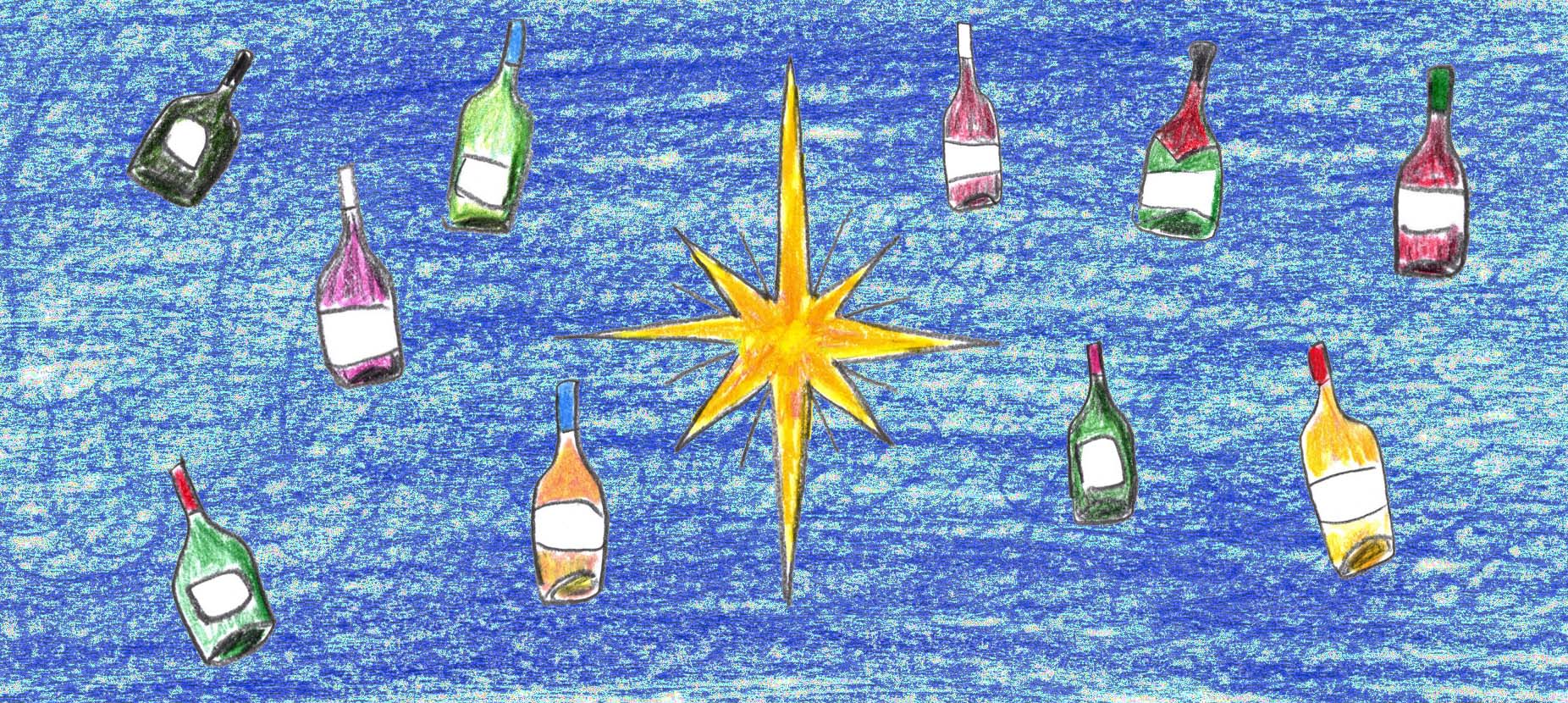
And through all that tasting, I’ve developed what I think of as my own North Star wines—bottles I return to that orient my understanding of what’s possible. It might be a Vouvray, a Barolo, a Blanc de Blancs, or a Pomerol. Some people have one anchor wine. Some have several. But these wines function like a personal library of books you return to with pages you’ve dog-eared. When these guiding wines exist, what matters isn’t the price or the pedigree – it’s the accessibility. These wines drive discovery through repetition. They evolve with you. And as a wine writer, this approach gives me the lived experience I can leverage to communicate.
This does not diminish benchmark wines. They remain powerful symbols of excellence, aspiration, and history, commanding extraordinary prices and global attention. They still guide and inspire us, yet more often now as ideas rather than experiences – wines we reference, study, and admire, but rarely taste often enough to fully anchor our sense of place in the wine universe.
The wine landscape is evolving. The new benchmarks are often those that stay present and accessible—wines that reflect terroir and intention, that people can actually return to. Wines that get talked about, remembered, and shared over a meal. These living wines, not untouchable icons, increasingly shape the conversation.
As wine culture shifts, influence becomes less about exclusivity and more about presence. For sommeliers, it’s about fluency, curiosity, and lived experience as much as access to rare bottles. For writers, it means building expertise through engagement with wine’s culture, people, places, and the bottles we can return to. For the vast majority of producers, this shift is validating. Their wines can be someone’s North Star. Making wines meant to be opened, shared, and remembered becomes an art form in itself. Accessibility is not a compromise; it’s cultural power.
And for the general wine enthusiast, our largest group of tasters, this means everything. It means inclusion. It drives curiosity with open arms.
Wine culture has learned to navigate with and around its traditional benchmarks. Some tasters find their own North Star, wherever it lives on the spectrum. Others keep exploring. What matters is the tasting, the returning, the witnessing. In the end, wine without witnesses is only potential. With them, wine is everything.